Types Of Accidental In Music - Accidentals Gemini Musical Theatre Company / Stack exchange network consists of 177 q&a communities including stack overflow,.. The germanic equivalent to accidenting would be befalling, which gives us some perspective on how to. There are lots of different types of ornaments that you're likely to see when reading and playing music. Tempo, metre, form (e.g., whether sections are repeated), and details about specific playing techniques (e.g., which. Learn about the different types of rest. Introductory and intermediate music theory lessons, exercises, ear trainers, and calculators.
When you start writing a piece of music one of the first things you do is choose a key to compose in. Paul describes the most common types of negligent discharge and how to avoid them.paul's patreon: Lowering a note is just the opposite, we play the note below it. If in a certain key signature there would usually be a a (b), they write an a (natural). Raising a note means that instead of playing a certain note, we play the note above it.
List Of All Major Scales Piano Music Theory from pianomusictheory.files.wordpress.com When adding 1 accidental, write it to the left (further away) from the given accidental. What to call notes with accidentals. An accidental only affects any notes in a measure after the accidental occurs. Sometimes the pitch of the upper note of a trill needs to be changed by an accidental to fit with the intended harmony. There is the ascending accidental note (sharp: Note that the a needs to be raised with an accidental, because it is not in the key signature of d major. When most people think about accidents, they conjure up scenes of car crashes, oil spills, and the family dog leaving an unwelcome surprise on the rug, but accidentals in music couldn't be more different. In music, ornaments are used in much the same way.
The word accidental has all the elegance of a police blotter:
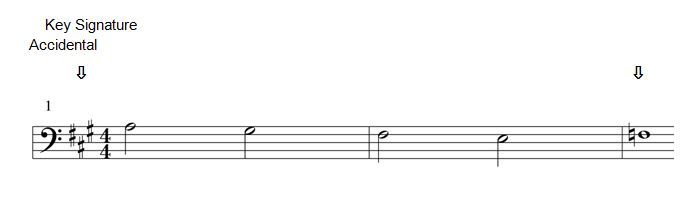
Learn about the different types of music accidentals in order to identify them correctly. If in a certain key signature there would usually be a a (b), they write an a (natural). Accidental, in music, sign placed immediately to the left of (or above) a note to show that the note must be changed in pitch. When writing triads (no matter what the quality/type or position), an accidental on the given lower note may affect proper placement of triad accidentals. An accidental only affects any notes in a measure after the accidental occurs. In music, an accidental is a note of a pitch (or pitch class) that is not a member of the scale or mode indicated by the most recently applied key signature. Dots and ties learn how dots and ties modify the duration of notes. This choice of key determines the scale you use, how many sharps and flats there are and what chords you can use. Accidentals include sharps, flats, and naturals. Most music uses a key signature and it tells us which notes are going to be played sharp (♯), flat (♭), or natural (♮) throughout the piece. The third type of accidental we are going to look at is called the natural. In such a case why has the sharp. The word accidentals is sort of a misnomer within the world of music.
In music, ornaments are used in much the same way. The a (natural) is the accidental. In the musicxml 2.0 dtd this was a string with values that could be included. We use the word natural (or the symbol ) to say that a note is neither sharp nor flat. In such a case why has the sharp.
Music 101 What Is Musical Notation Learn About The Different Types Of Musical Notes And Time Signatures 2021 Masterclass from images.ctfassets.net Double sharps (×) and double flats (♭♭) Never try to squish the accidental directly above the given accidental. Steps and accidentals learn about half steps, whole steps, and the. The word accidental has all the elegance of a police blotter: There are three main types of accidentals in music; Accidentals an accidental is a musical symbol, such as a flat or sharp sign, that tells us to alter a note either by raising or lowering it. Notes with accidentals should be named using the note name plus the type of accidental. We will discuss 4 different types of accidentals in this section, which include the double flat, flat, sharp and double sharp.
For example, when c is increased by a semitone, it becomes c.
In the musicxml 2.0 dtd this was a string with values that could be included. V 7 is not the only possible applied chord—viiº is another common type of applied chord. In the notes prior to the sheet music, it is said that an accidental note only lasts for one bar. #), and the descending accidental note (flat: A flat (♭) lowers it by a semitone; Raising a note means that instead of playing a certain note, we play the note above it. Notes with accidentals should be named using the note name plus the type of accidental. Accidentals are used to change the original pitch of a particular note. I'm not a music expert buy after taking a semester of music theory i have learned that accidentals are the flats, naturals, and sharps written in the music that do not fit into the selected key signature for the piece. This can be indicated in one of two ways: There is the ascending accidental note (sharp: We use the word natural (or the symbol ) to say that a note is neither sharp nor flat. Accidentals include sharps, flats, and naturals.
Double sharps (×) and double flats (♭♭) A flat (♭) lowers it by a semitone; When writing triads (no matter what the quality/type or position), an accidental on the given lower note may affect proper placement of triad accidentals. Notes with accidentals should be named using the note name plus the type of accidental. Modulation describes the process where a piece of music changes from one key to another key.
Accidentals In Music What They Are And How They Work from www.musikalessons.com Modulation describes the process where a piece of music changes from one key to another key. If in a certain key signature there would usually be a a (b), they write an a (natural). For example, a b with a flat in front of it is called b flat. A sharp (♯) raises a note by a semitone; There is the ascending accidental note (sharp: In music, ornaments are used in much the same way. Double sharps (×) and double flats (♭♭) There are five types of accidentals and each of then perform different functions, they are;
Learn about five types of notes and how flags affect note duration.
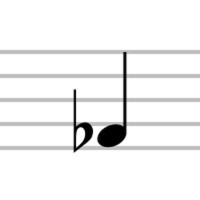
There is the ascending accidental note (sharp: Both accident and incident were formed from the present participles of the latin verbs (they could be roughly translated as accidenting and incidenting), which became nouns in french before crossing into english in the 14th century. An accidental is a musical symbol placed beside a note that creates a change in the note's pitch. A flat (♭) lowers it by a semitone; The germanic equivalent to accidenting would be befalling, which gives us some perspective on how to. What to call notes with accidentals. Accidentals in music are used to indicate any sharps or flats that should be played but are not part of the piece's key signature. Today we take a look at how accidentals work and what they look like on sheet music. The most commonly used accidentals in music are the sharp (♯), the flat (♭), and the natural (♮). Dots and ties learn how dots and ties modify the duration of notes. Tempo, metre, form (e.g., whether sections are repeated), and details about specific playing techniques (e.g., which. The word accidental has all the elegance of a police blotter: When writing triads (no matter what the quality/type or position), an accidental on the given lower note may affect proper placement of triad accidentals.
Accidentals in music are used to indicate any sharps or flats that should be played but are not part of the piece's key signature accidental in music. Learn about the different types of rest.