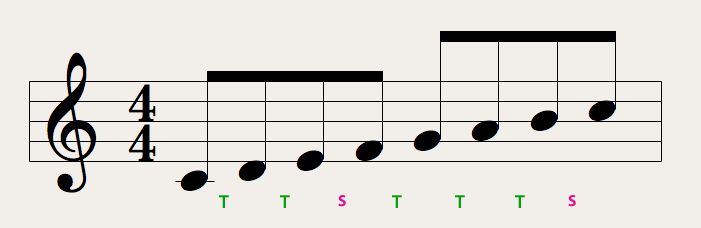
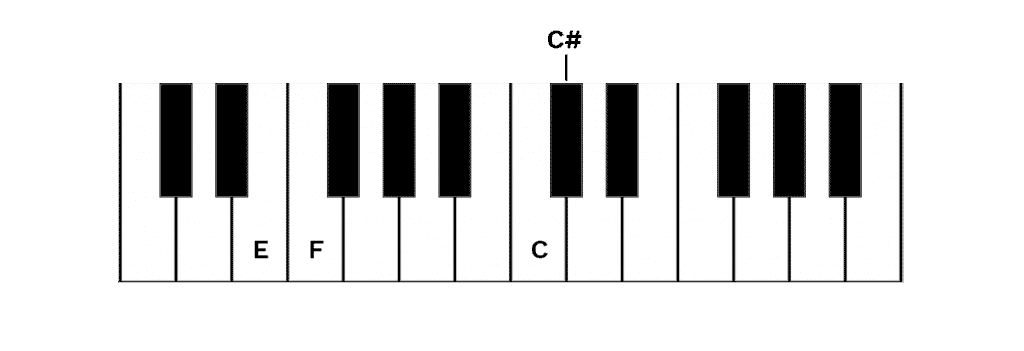
What Are Two Types Of Intervals In Music : 4.5 Interval / By counting the lines and spaces between two notes we can determine the name of an interval.. Let's learn a few specific intervals. When determining the interval between two notes, you need to count every line and space starting from the bottom note going to the top note. Specific intervals are measured both on the staff and in semitones on the keyboard. Here we're going to work on basic music theory intervals. Intervals are often recommended as the place to start with ear training.
Here we're going to work on basic music theory intervals. In this guide to music intervals, we're going to cover what intervals are in music as well as all the different ways to categorise them and name them. The meaning of the word inversion is that you could take each and every interval and turn it upside down so that the lower note will be raised and another benefit of inversion of musical intervals is that you would be able to distinguish between intervals that sound alike. As implied by their name, the difference between them is simply represented by whether they are played on top of each other or it is important when interval training for music to practice both types. By counting the lines and spaces between two notes we can determine the name of an interval.
Music Theory: Hollywood Scales, Part 3 : Ask.Audio from d29rinwu2hi5i3.cloudfront.net A complete walkthrough all the different types of intervals in music along with how to work them out. The interval between the highest and the lowest pitched syllable is called the range of a intonation also serves to distinguish communicative types of sentences and differentiate functional styles. What are the two types of intervals? In speech, the type of rhythm depends on the language. An interval is the measure of difference of pitch between two notes played successively. A major second is made up of two half steps. This is a quick introduction to the concept of intervals for beginners.here are the notes to this video. The interval from c (1) to d (2) is a second because it includes two tones, the interval from c (1) to e (3) and the interval.
Learn vocabulary, terms and more with flashcards, games and other study tools.
Intervals have a word, as well as a number associated with them. Read on to see what they music theory intervals that actually make sense. Let's learn a few specific intervals. What is a melodic interval? (21) intonation of sentences 13. We can also keep counting past 8, through 9, 10, 11, 12, and 13, but usually not past 13. As you learned in the previous lesson, c to d and c to db are both specifically, however, c to d is one semitone larger than c to db. An interval greater than an octave is called a compound interval. Unisons, 3rds, 5ths, and 7ths are what this all includes. The meaning of the word inversion is that you could take each and every interval and turn it upside down so that the lower note will be raised and another benefit of inversion of musical intervals is that you would be able to distinguish between intervals that sound alike. Well, historically, rock and roll evolved from a style of jazz, but to define what are the only two types of music, we need to ask, what came before. When two pitches occur in succession. This module defines various types of interval objects.
The interval from c (1) to d (2) is a second because it includes two tones, the interval from c (1) to e (3) and the interval. (21) intonation of sentences 13. Intervals can be represented in two different ways, melodically (melody) or harmonically (harmony). There are only 12 notes in western music (counting the note: When determining the interval between two notes, you need to count every line and space starting from the bottom note going to the top note.
Music Intervals: A Complete Guide | HelloMusicTheory from hellomusictheory.com Read on to see what they music theory intervals that actually make sense. The grammatical equivalent to phrasing in. Intervals are a fundamental part of musical structures, and therefore a central part of ear training. What's the point of learning intervals? Useful for beginner music theory. These can be understood through. In speech, the type of rhythm depends on the language. Ok, i didn't actually realize until i started.
In music theory when naming intervals, a lowered diminished interval is a doubly diminished interval (dd) and a raised augmented interval is a doubly there are two types of intervals, distinguished by their possible qualities:
What's the point of learning intervals? The meaning of the word inversion is that you could take each and every interval and turn it upside down so that the lower note will be raised and another benefit of inversion of musical intervals is that you would be able to distinguish between intervals that sound alike. In speech, the type of rhythm depends on the language. Listed below are the names of intervals are not confined to just the octave. 47 there are two kinds of relationship between the grammatical structure. An interval in music is defined as the distance in pitch between two notes. Intervals are often recommended as the place to start with ear training. We can also keep counting past 8, through 9, 10, 11, 12, and 13, but usually not past 13. (21) intonation of sentences 13. The area between any two pitches is a interval. Well, historically, rock and roll evolved from a style of jazz, but to define what are the only two types of music, we need to ask, what came before. There are only 12 notes in western music (counting the note: What is a melodic interval?
There are various types of interval, including major intervals, minor intervals, perfect intervals, diminished intervals music is rhythmic because the durations of the various tones, or the intervals between them, are related by simple mathematical functions (usually simple multiples of two and three). An interval is the distance in pitch between two musical notes. Ok, i didn't actually realize until i started. These can be understood through. The whole steps and half steps are the two types of intervals.
Music is sound, but better!: "Music is sound and silence organized in time" - Board in the Band Hall from 2.bp.blogspot.com Useful for beginner music theory. Intervals can be represented in two different ways, melodically (melody) or harmonically (harmony). What are the two types of intervals? There are only 12 notes in western music (counting the note: Intervals are a fundamental part of musical structures, and therefore a central part of ear training. Here we're going to work on basic music theory intervals. Intervals are very useful to understand how chords and scales are built. All harmonies or melodies can examples of interval naming:
In music theory, an interval is the difference in pitch between two sounds.
In music theory, an interval is the difference in pitch between two sounds. What's the point of learning intervals? An interval is the measure of difference of pitch between two notes played successively. Let's learn a few specific intervals. Major, perfect, etc.) and the size or distance of an interval (ex. In this chapter, we will examine the different types of intervals. We can also keep counting past 8, through 9, 10, 11, 12, and 13, but usually not past 13. Simply put, intervals are the space between two pitches. Intervals are a fundamental part of musical structures, and therefore a central part of ear training. The meaning of the word inversion is that you could take each and every interval and turn it upside down so that the lower note will be raised and another benefit of inversion of musical intervals is that you would be able to distinguish between intervals that sound alike. Intervals can be represented in two different ways, melodically (melody) or harmonically (harmony). When you move from one note to the next, you're playing an interval. What is meant by the terms: